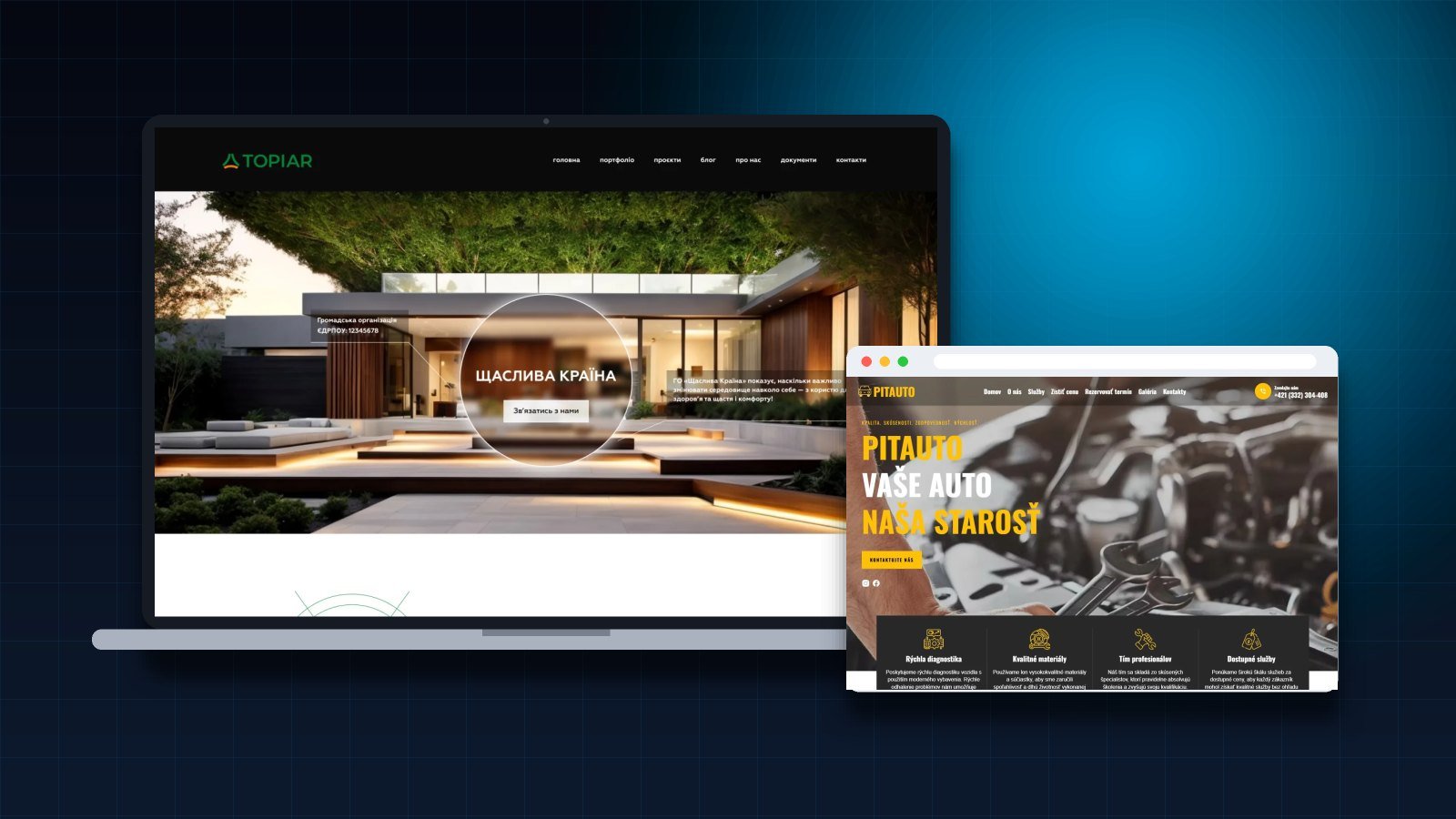
“How much does a website cost?” is the first question almost every client asks me — and the hardest one to answer in a single sentence. A website for a tradesperson in northern Vaud and an online shop with 2,000 products have nothing in common except the word “website”. This guide explains, without invented figures, what really drives the cost of web design and website development in Switzerland, how long a project takes and how to compare quotes.
What you are actually paying for
The price of a website is not a rate per page. It reflects the time needed for five kinds of work:
- Thinking: understanding your business, your clients and your competitors, and deciding what the website must achieve (calls, quote requests, sales, bookings).
- Content: copy, photos, translations. This is often the most underestimated part — and the one that delays projects the most.
- Design: a template adapted quickly, or a design created specifically for your brand.
- Development: build, mobile version, forms and any specific features (booking, payment, customer accounts, syncing with other software).
- Launch and what comes after: testing, technical SEO, hosting, maintenance, further development.
So two five-page websites can be priced very differently: one reuses your existing copy and a template, the other needs all the content written from scratch, a custom design and an English version.
What pushes a quote up (or down)
| Factor | Impact on budget | How to keep it under control |
|---|---|---|
| Number of pages | Moderate: each page has to be structured, written and checked | One page per important service, no “filler” pages |
| Languages | High: every language is another website to write and optimise for search | Start with your main language and add others when your clients justify it |
| Copywriting | High if everything has to be written | Provide notes, answers to a questionnaire and examples |
| Photos | Variable: stock images, your own photos or a photographer | Real photos of your work convert better than generic images |
| Custom design | High | A simple, polished design is enough for most SMEs |
| Business features | Highly variable: booking, payment, catalogue, API | List the features you need at launch and keep the rest for later |
| Support after launch | Recurring | Choose a level of maintenance that matches how important the website is |
The main types of website and their timelines
To give you a rough idea, these are the minimum timelines I quote for each format, counted from the moment the content is ready:
- landing page: from 7 days — a single page, ideal for one specific offer or a Google Ads campaign;
- business website: from 14 days — several pages presenting your business and its services;
- online shop: from 20 days — catalogue, payment, delivery;
- custom web development: from 60 days — booking systems, platforms, business tools.
These timelines mostly slip for one reason: waiting for copy and photos. Preparing your content before the project starts is the surest way to stay on schedule.
The costs people forget to budget for
The build quote isn’t the only cost. To compare fairly, add:
- the domain name (.ch or another), renewed every year;
- hosting, ideally in Switzerland or the European Union to keep compliance simple;
- licences: premium theme, paid plugins, booking or email marketing tools;
- maintenance: updates, backups, security — a WordPress site that isn’t maintained becomes vulnerable;
- compliance: legal notice and a privacy policy that meets the Swiss Federal Act on Data Protection (FADP, in force since 1 September 2023) and, if you target the EU, the GDPR;
- VAT: if your provider is VAT-registered, check whether the quote is excluding or including VAT (the standard rate in Switzerland is 8.1%).
How to compare two web design quotes
A low quote isn’t necessarily cheaper: it all depends on what it includes. Ask every provider these questions:
- Who writes the copy, and how many rounds of revisions are included?
- Is the website built on a standard platform (WordPress, for example) that someone else could take over?
- Who owns the domain, the hosting and the admin access?
- Is technical SEO included: titles, descriptions, speed, structured data, redirects?
- What happens after launch: training, maintenance, response times?
- Is enquiry tracking (forms, phone, WhatsApp) set up, so you can measure what the website brings in?
A clear quote sets out the deliverables, the stages, the schedule and what is not included. That document protects both sides.
The stages of a well-run project
- First call (20–30 minutes): your business, your goals, your intended budget, examples of websites you like.
- Proposal: written scope, deliverables, timelines, options.
- Structure: the page plan and the path that leads visitors to contact you.
- Content and design: sign-off on the home page, then the inner pages.
- Development and testing: mobile, forms, speed, technical SEO.
- Launch: redirects if the website replaces an old one, Search Console, conversion tracking.
- Follow-up: first results, adjustments, maintenance.
A cheap website: when it makes sense, and when it doesn’t
An online website builder or a low-cost template can be enough to test an idea, present a brand-new business or simply list your contact details. But as soon as the website needs to bring in regular enquiries, the limits show: little control over SEO, average speed and a generic structure that doesn’t answer your clients’ questions. The right yardstick isn’t what the website costs, but what it costs you in lost clients.
Frequently asked questions
Can I get a fixed price?
Yes, as soon as the scope is defined in writing. What makes a budget drift is adding things along the way: it’s better to list them at the start, even if you plan them for a second phase.
Do I have to pay everything up front?
The usual arrangement is a deposit at the start and the balance at launch. Larger projects can be split into stages that are invoiced separately.
Is SEO included in the website build?
The technical groundwork always should be. Ongoing SEO work — content, local SEO, ranking tracking — is a separate service: see local SEO in Switzerland.
In short
Website cost in Switzerland depends less on the number of pages than on content, languages, features and ongoing support. Prepare your goals and your copy, ask for a written scope and compare quotes on what they actually include. For a precise estimate for your project, my web design in Switzerland page explains how I work.